



Book Review by K.S.Loganathan
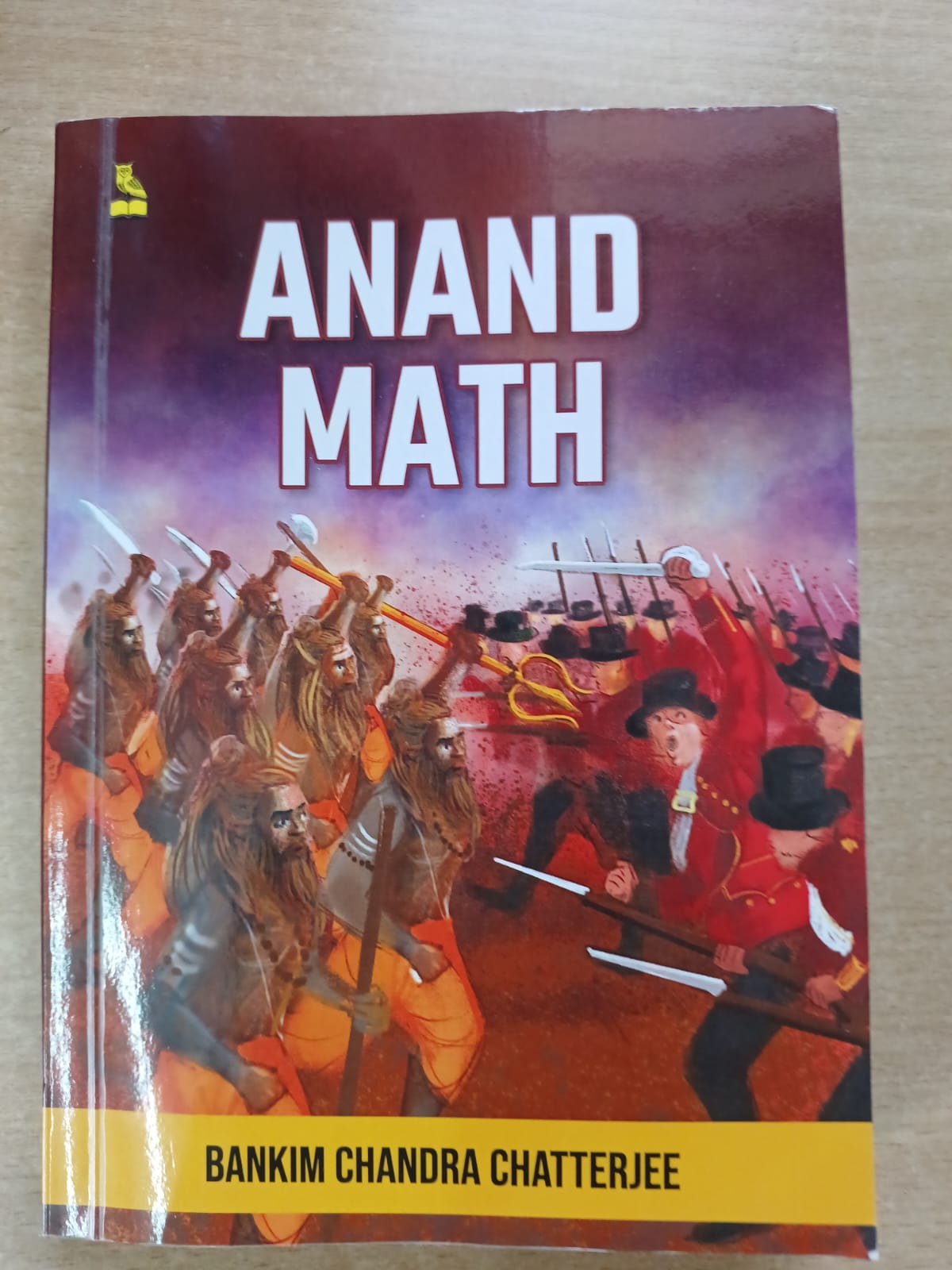
Bankim Chandra Chatterjee (1838-1894) bestrides the modern Bengali literature world like a colossus, carving out through his writings a defining role in the Bengal Renaissance, which forged national consciousness during the Indian independence movement. He is the pioneer in the style of Bengali prose (Sadhu Bhasa) employed in the literary monthly magazine “Bangadarsana” which he founded in 1872; its stated purpose was to ‘disanglicise ourselves so as to speak to the masses in the language which they may understand’.
‘Anand Math ‘ is his historical novel serialised in 1882 in ‘Bangadarsana’. It is set in North Bengal during the Great Famine of 1770, which devastated the lower Gangetic plains, causing the deaths of ten million people, a third of the population, through malnutrition and outbreak of diseases. It occurred during the dual governance of Bengal by its Nawab Mir Jaffer, who administered it, and the British East India Company, which had, at the time, the Mughal Emperor’s consent to collect revenue in Bengal.
The story covers the Sanyasi uprising, which was supported by the impoverished peasants, and their unorganised righteous anger against the Muslim and British soldiers sent to quell them. Chatterjee weaves the concept of the Motherland embodying the spirit of patriotism, and includes the song ‘Vande Mataram’ in the book. As it became a rallying cry for Indian independence, the British authorities banned the book for its anti-colonial sentiment. After Independence, its first two stanzas were officially adopted as the National Song. It holds equal status to the national anthem, Jana Gana Mana.
The main characters are Mahendra, a wealthy zamindar who is initiated into the Anand Math Order by Satyananda, its leader , Bhavananda, its commander; Jivananda, a disciple; and his wife Santi. Mahendra, his wife Kalyani, and daughter flee their famine-stricken village, get separated and are rescued by the Sanyasis. In inducting Mahendra into the Order, Satyananda shows him the thematic triptych of past/present/ future of Mother India, through the idols of Jagadatri/ Kali/ Durga. The revolt succeeds in bringing the rural administration to a standstill by routing the battalions sent to crush it. Chatterjee captures the emotions, aspirations, struggles and spiritual awakening of the province in a tumultuous era.
The latest translation brought out by Pustak Mahal suffers from poor editing, and it is replete with spacing errors and spelling mistakes, which must be corrected in future editions. Translations of Bengali literary works into English are rare, due to publishing priorities, linguistic, and cultural barriers and scarce translation resources. Therefore, we must appreciate the publisher’s efforts to bring this work to a wider audience.
Chatterjee’s storytelling has its flaws, and his is not a polished narrative for modern times, nor is it for everyone. But all the same, Ananda Math should be read with detachment, not only for understanding the ideological shifts that underpinned India’s freedom struggle, but also as a modern environmental story of the backlash of forest-dependent and agrarian communities against exploitation.