




Translated from Bengali by Prasun Roy, Fingerprint 2025
Book Review by K.S.Loganathan
Bhibhutibhushan Bandyopadhyay (1893-1950) is one of Bengal’s greatest storytellers. His best-known works include Pather Panchali, Aparajito (featured in Satyajit Ray’s Apu Trilogy) , Aranyak, Adarsha Hindu Hotel and Icchamati. He wrote many supernatural/ folklore stories set in lonely rural landscapes and abandoned buildings , featuring encounters with spirits lingering between life and death. An early translation into English by Phyllis Granoff , titled ‘A Strange Attachment and Other Stories’, which was published in 1984 is no longer in print.
The thirteen stories translated by Prasun Roy include ‘Boutik Palanka ‘, a story about a cursed Chinese antique bed; a strange attachment that an indigent Brahmin cook forms with an abandoned mansion; a cursed medallion; malevolent apparitions; blood dripping from a sword belonging to an idol in a derelict temple; haunted places,and manifestations in isolated areas ,among others. By themselves, these tales are not frightening when read in broad daylight with people around, but Bhibhutibhushan Bandyopadhyay is a master of the subtle, atmospheric, and psychological horror which he sets in haunted spaces, with malevolent apparitions building a slow tempo with high detailing: if a traveller finds himself in a moonlit yard in a desolate space with such eerie forces, what stories would they tell and what dread would he experience?
I cannot read Bengali ,so to assess the translation ,I compared the two English versions of ‘A Strange Attachment/A Paranormal Illusion’ by Granoff and Roy respectively. I find Granoff’s to be free-flowing prose, with the dialogues appropriate to the character’s normal delivery. But Roy attempts to gild the lily, as his prose is stilted, as are the dialogues and internal thoughts. There are also added questions at the end of the story which seem contrived, and these sound like the blurb in a novel or a cinema poster, which must disappoint the Bengali readers.
In translating horror stories, the translator must faithfully capture the imagery and tempo of the original story for the reader to experience the dread and to adjust the tone to modern audiences. It is a difficult ask, and one must appreciate the translator’s/publisher’s efforts to bring a Bengali classic short story collection to a wider audience. The reader is advised to take one story at a time and to adjust his lens through which he experiences the paranormal situation.
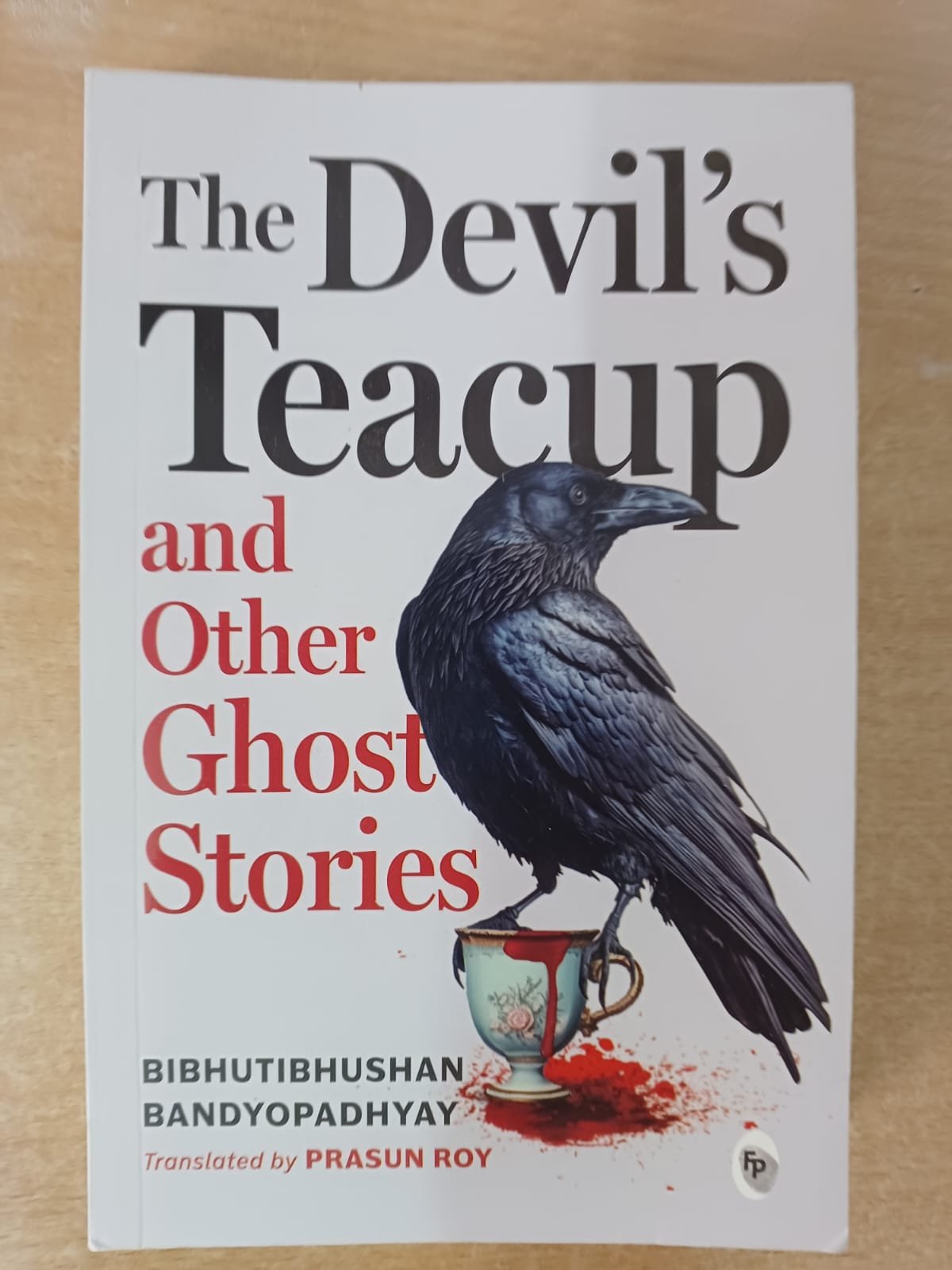
Pic taken by K.S. Loganathan on his phone