


By Zena Hitz, Princeton University Press
Reviewed by K.S.Loganathan
Zena Hitz has a Ph.D in ancient philosophy from Princeton University, and she studies and teaches across the liberal arts in Annapolis, Maryland, U.S. The book is an exploration of the author's attempts at intellectual activities and experiences as a convert to the Catholic faith in search of greater fulfillment. The book is about her enquiry into what intellectual life is and the role it plays in happiness and connectedness in community living.She defines intellectual life as an inner life, a space of one's own thinking when one is withdrawn from the social world. It is a source of dignity and a way of connecting with other like- minded people. It avoids the corruption of learning and of working solely for social success.Aristotle considered that work is for the sake of leisure: leisure, in turn, is for contemplation or philosophy. However, industrialization, mass education ,the internet ,and more recently, the advent of large language models have all reduced education to mere information retrieval and subordinated learning outcomes towards broad political goals and for the purpose of facilitating standardized work, and social utility. Person -to - person teaching ,the examination of primary sources of knowledge, the desire for truth and understanding have all suffered in the quest for profit and pandering to the love of spectacle. The love of learning for its own sake unveils an individual who is not reducible to his or her economic, social ,or political contributions.The author quotes frequently from the Christian theologian St.Augustine of Hippo (354- 430 C.E.) In two hundred pages of his work 'Confessions' ,St Augustine raises seven hundred questions on moral issues, many of which are not resolved. Dorothy Day, and Elena Ferrante's Neapolitan novels are also covered in detail. Examples of unlikely intellectuals ,fictional and real , are also given.I found the text to be wholly centered on Western and Christian theology and quotes from philosophers, particularly from the ancient times. While it gives it academic rigor ,it makes the book feel somewhat remote from the present day : the language is not simple or sweet, nor is it suitable for an audiobook ,and many statements are needlessly repeated. It has only three chapters . Nevertheless it is a timely reminder of the importance of the intrinsic value of an intellectual life.
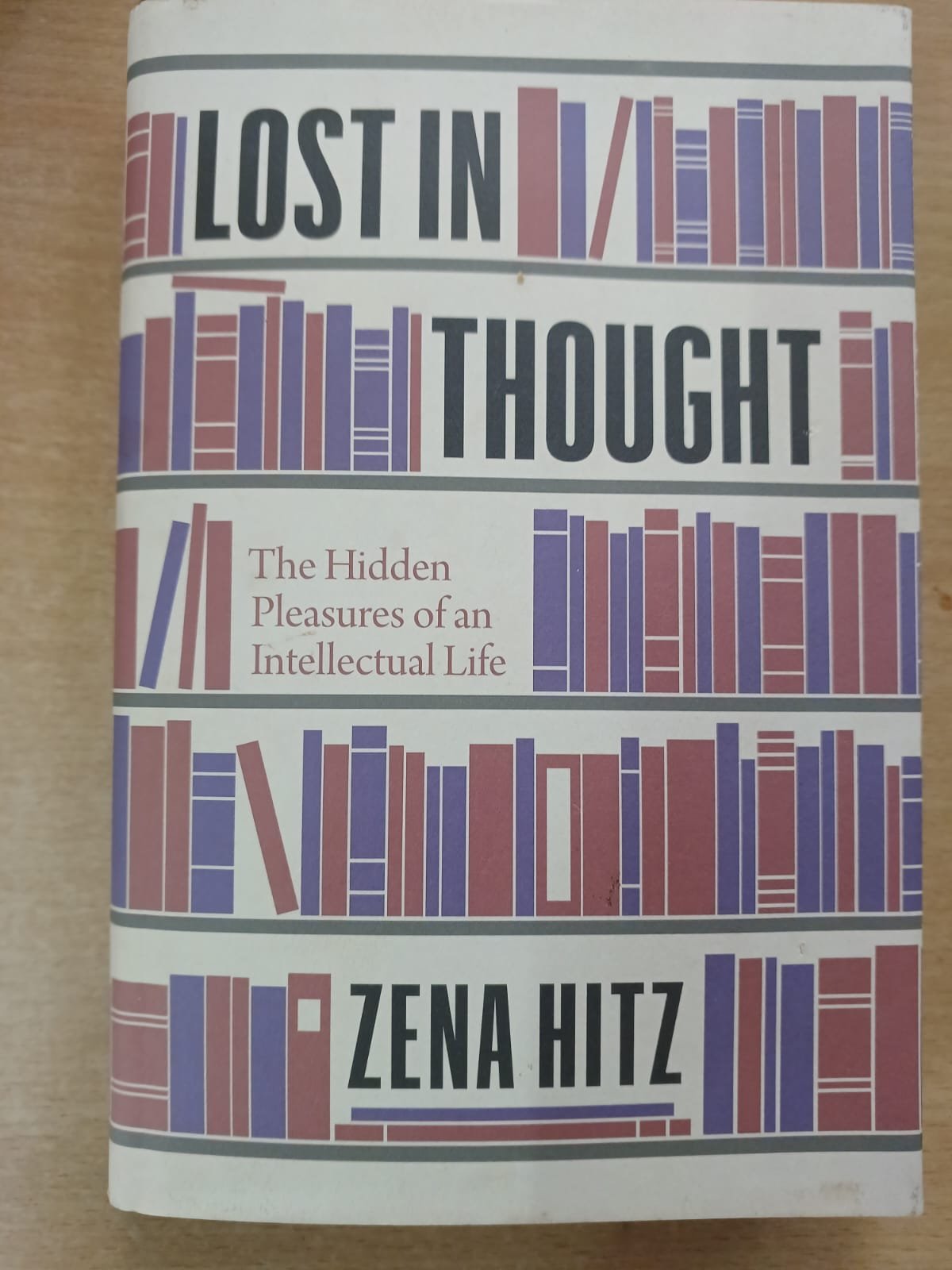
Pic of book cover taken by K.S.Loganathan on his phone.