



Book review by K.S. Loganathan
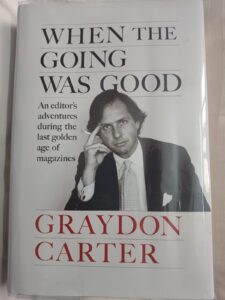
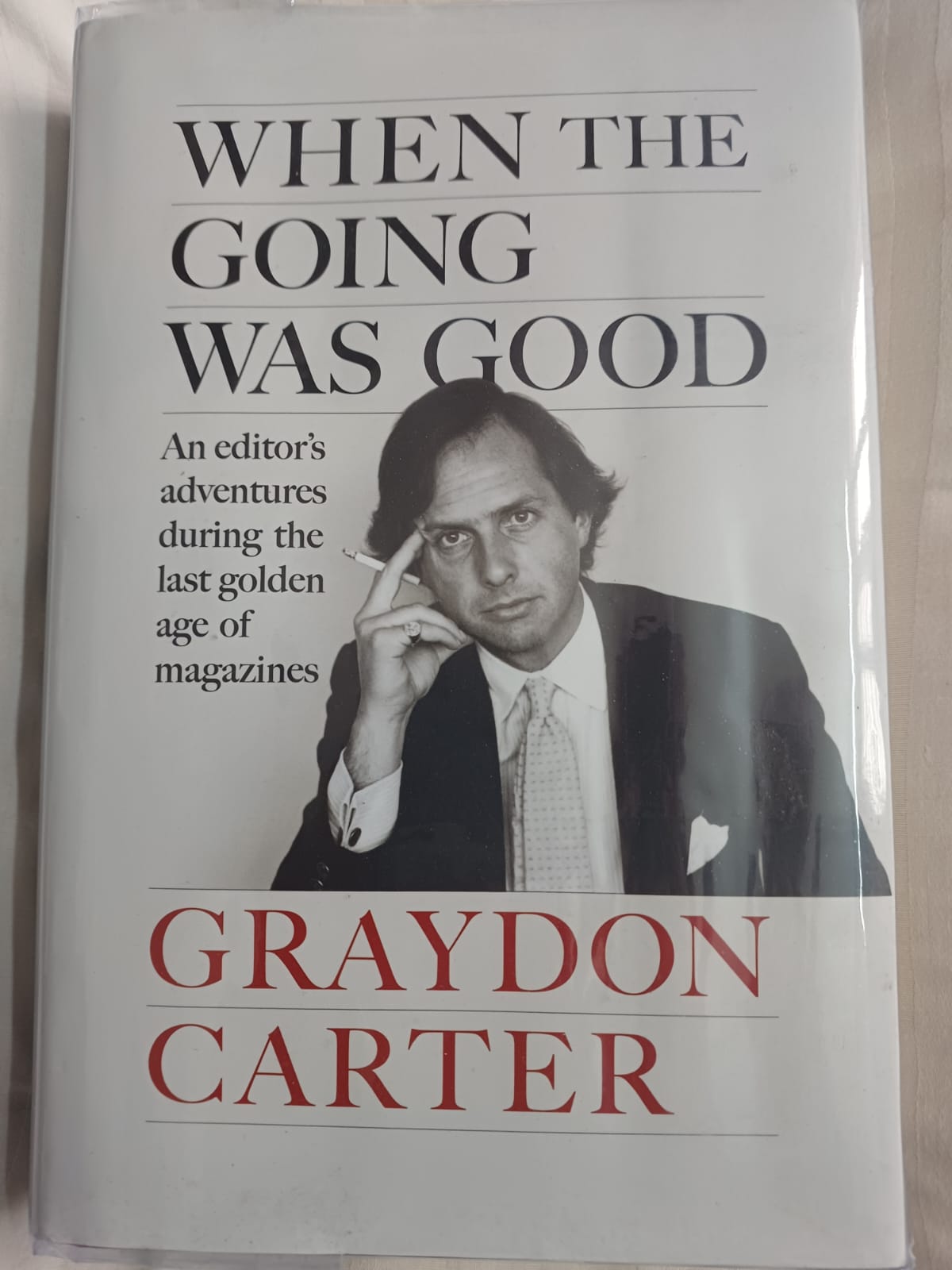
Graydon Carter is a Canadian writer and editor, documentary film-maker and restaurateur. In his memoirs, he recounts the Golden Age of Magazines in America, in particular his editorship of Vanity Fair from the Conde’Nast stable between 1992 and 2017 under the billionaire proprietor, Si Newhouse.The Golden Age, which reached its high watermark in the 1990s, was characterized by mass circulation and diversification of content, driven by high advertising revenues and media empires. As a Canadian lad who started as a lineman for the Canadian National Railway, he was “a college discard” but he was a natural “magazine man ” from the time he put together a college magazine. He migrated to New York in the summer of 1978 when he landed a job in Time magazine, the influential political and cultural icon of the time. In that star-studded assembly of writers, he was a “floater”, a man for all media, a jack of all trades, with the uniqueness thanks to his Canadian upbringing, of having imbibed an international slice of culture, equally divided between America on one side and Britain and Europe on the other.
In 1983, Carter spent three weeks following the real estate developer Donald Trump for a GQ cover article. Trump was not amused with his portrayal in the article as” an outer borough sharpie with a taste that veered toward the showy and vulgar”. In another portrayal for the first issue of the satirical magazine ‘Spy’, Carter described Trump as a “short-fingered vulgarian”. Over his magazine life, Carter collected some 48 protests and tweets from Trump which he pasted on a wall at his home, telling visitors that it was the only wall that Trump ever built.
Carter got the dream job as editor of ‘Vanity Fair’ , a high-revenue influential glossy monthly publication that held massive cultural authority in its heyday. It featured luxurious photographs, top-tier long-form writing and high-stakes advertising and commanded good visibility at newsstands and bookshops. The detailed, rigorous, long -form narrative journalism articles in it were all well researched, taking a writer several months to write from idea to final copy, and were quite expensive ( sometimes costing up to USD one million as in the case of O.J.Simpson court trial ) . Writers wrote their stories as mini- novels , combining narrative and news reports and disclosing new information by gaining access to the principals or those close to them. The news stories were almost like a condensed book, 17-20,000 words long; they would often become books and cinema scripts in time.
The golden age of magazines coincided with the tectonic shift, which took place in the U.S as it changed gradually from a heavy industrial economy to an entertainment economy based around sports,information technology, film and television. Vanity Fair’s focus pivoted toward the world of literature, art, fashion, show business, politics, Wall Street and Silicon Valley, not missing the scoops and scandals: it also included dispatches from trouble spots around the world. It featured tasteful but arresting cover portraits of the current celebrities that a reader could have on the coffee table: they were painstakingly composed by the famed in- house photographer, Annie Leibovitz.
Alongside its magazine content, Vanity Fair built up its subscription and advertising revenues by hosting Oscar parties, special events and overseas dinners and bringing out Annual Hollywood issues etc. The unmasking of Deep Throat, the coverage of 9/11, the war in Iraq and the recession following the financial crisis of 2008 were some of the best stories told by the best journalists in the field when Carter was editor.
The golden age of print began to tarnish when the newsstands folded with the rise of the internet and digital platforms: as the visibility of printed magazines waned and as the great recession of 2008 took its toll, advertisers shifted to digital platforms. #After leaving ‘Vanity Fair’, Carter has started ‘Airmail’, a digital newsweekly digest. Carter’s memoir is laced with interesting stories and candid comments on the numerous writers and celebrities he has met over a fifty-year magazine career. Carter says as an editor, he was always petrified about plagiarism, libel issues, or a writer just making something up. He gives very good advice on running a magazine and some rules for living, including my favourite, ” Whatever you do, whatever you build, it has to have a point “(otherwise known in marketspeak as its USP). Incidentally, as acknowledged by the author, the title of the book is taken from Evelyn Waugh’s travel writing anthology published in 1946, but there is no mention of Waugh or his travels in the book. There are some illustrations by Eric Hanson, but none of the famous portraits or gatefolds that graced the covers of the print magazines of the era are included, which is a disappointment. This autobiography will be of value to writers and journalists as a chronicle of the golden age of print magazines.